A 19th-century doctor arrived in Upper Silesia to care for its people; more than 150 years later, his name still opens doors to knowledge in Rybnik.
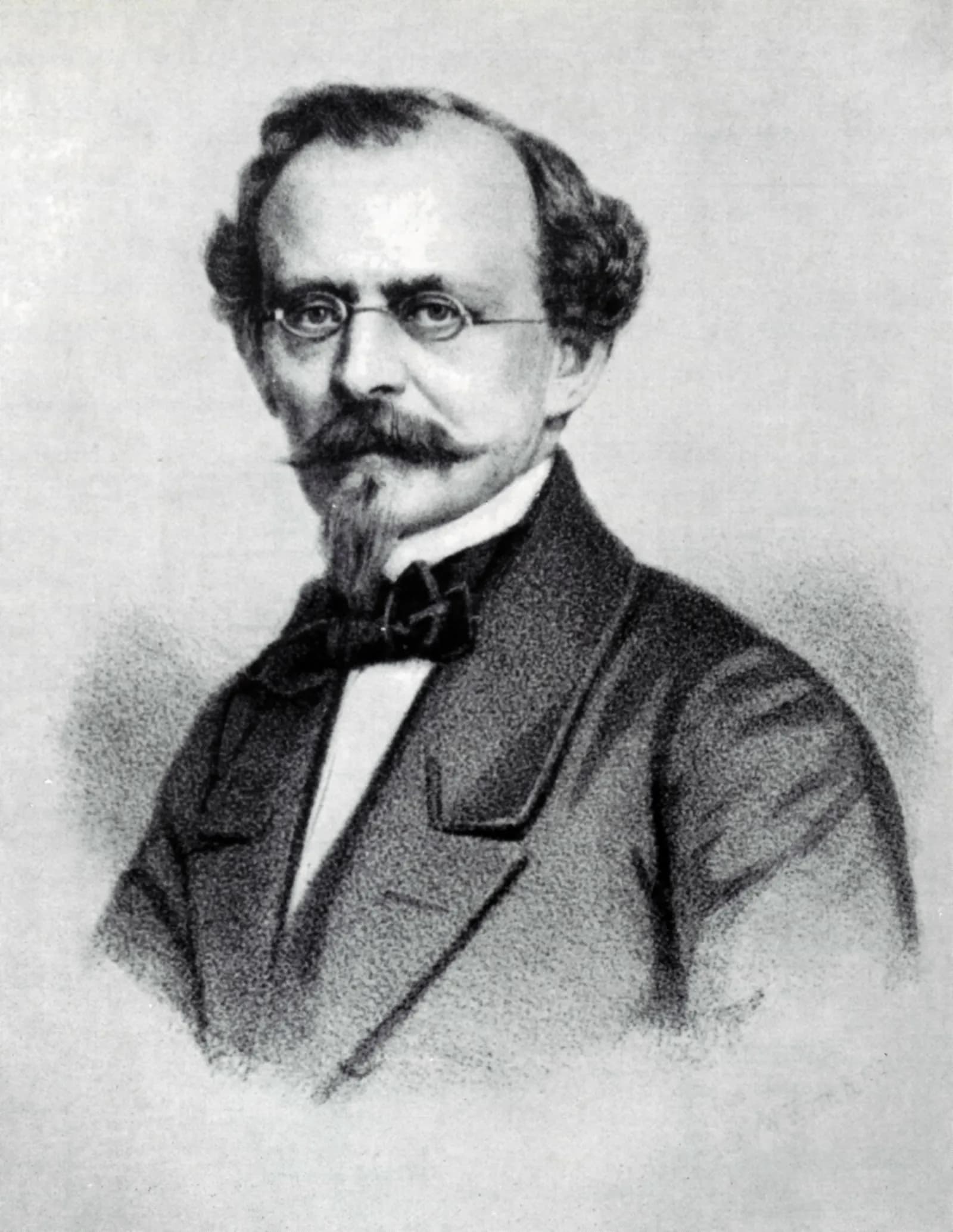
When Julius Roger arrived in Upper Silesia in 1847, he was a young doctor beginning a new chapter far from his birthplace in the Swabian Jura. He could hardly have known that his work would eventually become part of the cultural and educational landscape of Rybnik.
Today, his name belongs to the Juliusz Education Centre, housed in the former Juliusz hospital complex. The centre explores medicine, the human body and the history of healthcare through interactive exhibitions, but its existence is rooted in a much older story: that of a doctor whose interests extended well beyond the consulting room.
Roger was born in 1819 in Niederstotzingen and initially intended to become a Benedictine clergyman. Health reasons changed that path, leading him instead towards medicine. He studied in Tübingen, trained in Augsburg and later specialised in ophthalmology in Vienna before taking up his position in Upper Silesia.
It was there that his professional life became closely connected with the local community.
A doctor whose work reached beyond the hospital
Roger arrived in Rudy at a difficult moment. A typhus epidemic and famine were affecting the poorer population, and his responsibilities extended across the rural population of the Rybnik district and surrounding areas.
His response was not limited to treating individual patients. He became a princely sanitary councillor and was involved in developing healthcare infrastructure, including a small hospital in Rudy. He also supported the hospital in Pilchowice and an orphanage in Lyski.
The work demanded practical medicine, organisation and an understanding of the conditions in which people lived. But Roger's curiosity did not stop there.
During his travels as a rural doctor, he became fascinated by the natural environment and traditions of Upper Silesia. He studied insects, particularly beetles, and published scientific observations in specialist journals. His research eventually earned him recognition as an entomologist beyond the region.
Then another interest began to take shape.
Roger encountered folk songs during his journeys through the countryside and became increasingly interested in documenting them. He learned Polish and worked with Polish-speaking cultural figures, eventually producing one of the most important collections associated with his name.
Published in Wrocław in 1889, Pieśni ludu polskiego w Górnym Szląsku z muzyką brought together 546 Upper Silesian folk songs, collected and published by Roger.
Medicine, natural science and ethnography may appear to belong to separate worlds, but together they reveal something important about his character. Roger was interested in the whole environment in which people lived, from their health and surroundings to their language, customs and music.
A hospital becomes part of his legacy
Roger's plans for healthcare in the region continued even after his death.
On 7 January 1865, during a princely hunt in the forests around Rudy, he suffered a fatal heart attack. He was only 45. He was buried four days later at the Church of St Mary Magdalene in Rudy, where a commemorative obelisk still marks his grave.
One of his unrealised ambitions was a hospital for women in Rybnik. Construction began after his death, with work on the complex starting in 1868. The hospital was completed in 1869 and was named the Julius Hospital in his honour.
The buildings have since taken on a very different role, but the connection has never disappeared.
The former hospital complex is now home to the Juliusz Education Centre, where visitors can explore medicine through a mixture of historical material and modern interactive learning. Rather than simply displaying medical objects behind glass, the centre uses the building itself as part of the educational experience.
Visitors move through former hospital rooms representing different medical specialities, including emergency medicine, ophthalmology, orthopaedics, surgery, urology and dermatology. Interactive stations introduce anatomy, medical equipment and technologies associated with different fields.
For younger visitors, the experience can be playful and hands-on. Elsewhere, traditional displays, historical texts, engravings and dioramas provide a more conventional approach to the history of medicine. A reconstructed mid-20th-century medical office adds another tangible link to the profession Roger devoted his life to.
The result is an unusual continuation of the building's original purpose. A hospital once concerned with treating patients has become a place where visitors can learn how the human body works and how medicine has developed.
The legacy of curiosity
Roger's story is particularly relevant because his legacy was never confined to a single profession.
He was a doctor, but also a scientist and ethnographer. He collected insects, documented folk music, learned the language of the community he served and supported the development of healthcare institutions.
His insect collection was eventually transferred to a museum in Berlin, where it survived until 1945. His name, meanwhile, remained present in Upper Silesian public life through streets, institutions and organisations that adopted him as their patron.
The Juliusz Education Centre offers perhaps the most tangible modern expression of that continuing memory. Its subject is medicine, but its method reflects something broader that Roger himself embodied: learning through observation, investigation and curiosity.
That makes the former hospital more than an historic building containing a museum. It is a place where two eras of education meet. The 19th-century doctor who wanted to improve healthcare and understand the world around him has given his name to a 21st-century institution encouraging visitors to explore the same human body that once occupied his professional attention.
Roger's legacy therefore survives not simply because his name was preserved, but because the building associated with his life's work continues to be a place of learning. In Rybnik, his story has moved from medicine into education, proving that the most enduring legacies are sometimes the ones that continue to make people curious.
Visitor Information
Juliusz Education Centre
ul. Klasztorna 11, Rybnik
Opening hours:
Monday: Closed
Tuesday–Friday: 09:00–17:00
Saturday–Sunday: 11:00–19:00
Admission:
Regular: PLN 35
Concession: PLN 15