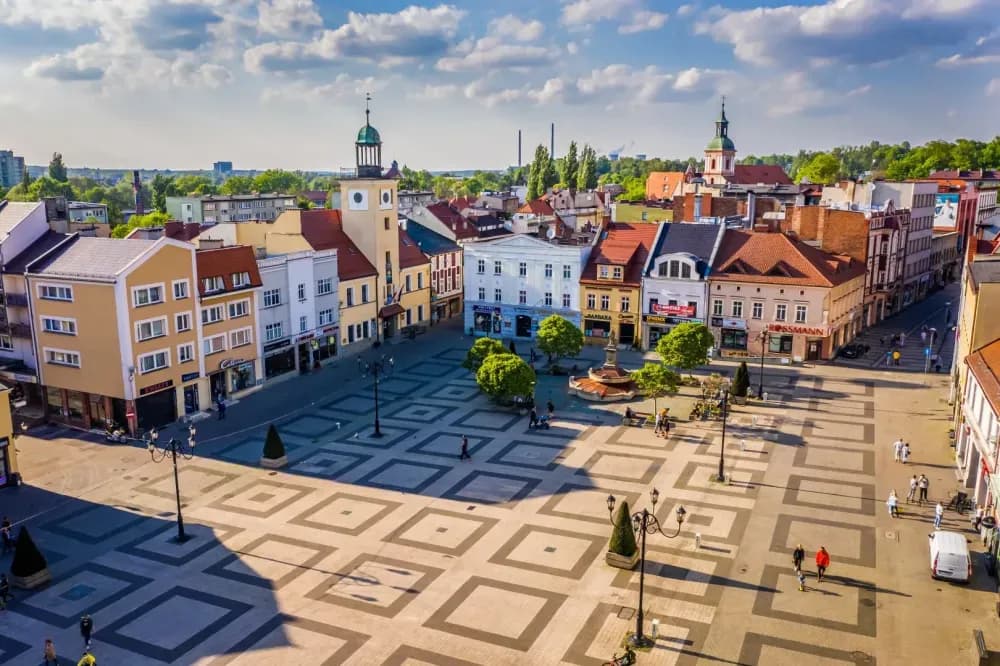
For many people, the name Rybnik immediately brings to mind coal mines, power stations and the industrial heritage that has shaped much of Upper Silesia. Yet spend a little time here and another side of the city quickly comes into view.
Colourful streets lead into a lively Market Square filled with cafés and independent shops. Woodland walking trails begin just beyond residential neighbourhoods. Historic fish ponds, parks and cycling routes provide peaceful escapes from urban life, while restored mining buildings now welcome visitors instead of workers heading underground.
Modern Rybnik is a city of contrasts. Proud of its industrial roots yet increasingly focused on sustainability, it has become one of southern Poland's most interesting examples of urban regeneration. Rather than leaving its past behind, the city has chosen to preserve it, transforming former industrial landmarks into cultural attractions while investing in greener neighbourhoods and a more diverse economy.
For visitors exploring Upper Silesia, Rybnik offers an authentic experience that combines history, architecture, nature and local culture in equal measure.
A City Built on Water Before Coal
Long before coal transformed the landscape, Rybnik owed its existence to water.
The city's name comes from the Polish word ryba, meaning fish, reflecting the network of ponds that supported the area's earliest communities. Fishing and agriculture sustained local families for centuries, with the surrounding wetlands providing both food and opportunities for trade.
Founded during the 10th century, Rybnik gradually developed into an important settlement on regional trading routes. By 1282, it had become the capital of the Duchy of Racibórz, strengthening its political and economic importance within medieval Silesia.
Although much of the medieval town has evolved, its historic layout remains visible today around the attractive Rynek, or Market Square, where cafés, restaurants and seasonal events continue a tradition of community life that stretches back hundreds of years.
For generations, Rybnik remained a modest market town surrounded by forests, farmland and fish ponds. Few could have imagined how dramatically its fortunes would change.
Coal Changes Everything
The discovery of rich coal deposits beneath Upper Silesia during the late eighteenth century transformed Rybnik forever.
What had been a quiet agricultural community rapidly evolved into one of the region's most important industrial centres. Mines opened across the surrounding area, attracting engineers, labourers and entrepreneurs from across Europe.
Among the earliest was the Hoym Mine, established in 1792. Renamed the Ignacy Mine after Polish President Ignacy Mościcki, it would operate for more than two centuries and become one of the city's defining landmarks.
Throughout the nineteenth century, Rybnik expanded alongside the wider industrial revolution sweeping across Upper Silesia. New railway connections strengthened trade links, while engineering works, manufacturing businesses and supporting industries developed around the growing coal sector.
As employment opportunities increased, so did the city's population. Entire neighbourhoods were built to house mining families, creating communities whose traditions, customs and identity became inseparable from the industry beneath their feet.
The Communist Era and the Energy Capital of Upper Silesia
Following the Second World War, Rybnik entered another period of rapid expansion.
Under Poland's communist government, coal production became central to national economic planning, placing Upper Silesia at the heart of the country's energy strategy.
One of the most significant developments came during the 1970s with the construction of the Rybnik Power Station. Fuelled by locally mined coal, the facility became one of Poland's largest electricity producers and reinforced the city's importance within the national energy network.
Mining offered stable employment for thousands of residents and supported generations of families. Schools, housing estates, sports clubs and cultural organisations all developed around the industry, creating a strong sense of local identity that remains evident today.
By the late 1980s, the wider Rybnik Coal Area supported dozens of active mines, making it one of Europe's most productive coal mining regions.
For many residents, coal represented far more than an economic resource. It shaped family traditions, community life and the character of the city itself.
The Price of Industrial Success
Industrial prosperity came at a considerable environmental cost.
For decades, coal extraction, heavy industry and coal-fired heating systems contributed to worsening air quality across Upper Silesia. During the winter months, smog became an increasingly familiar part of everyday life.
In 2018, Rybnik attracted international attention after being ranked among the European Union's most polluted cities. Although the issue reflected wider regional dependence on coal rather than the city alone, it highlighted the urgent need for environmental improvements and cleaner energy solutions.
Air quality became not only an environmental concern but also a public health issue, encouraging local authorities to accelerate investment in sustainable development, cleaner heating systems and urban greening projects.
Today, while challenges remain, Rybnik is steadily redefining its relationship with the industry that once defined it.
Reinventing a Mining City
Like many former industrial centres across Europe, Rybnik has spent the past three decades adapting to a changing economy.
Since the 1990s, commerce, healthcare, education, logistics and business services have become increasingly important sources of employment. Investment in modern infrastructure and public spaces has helped create a more diversified local economy while improving the quality of life for residents.
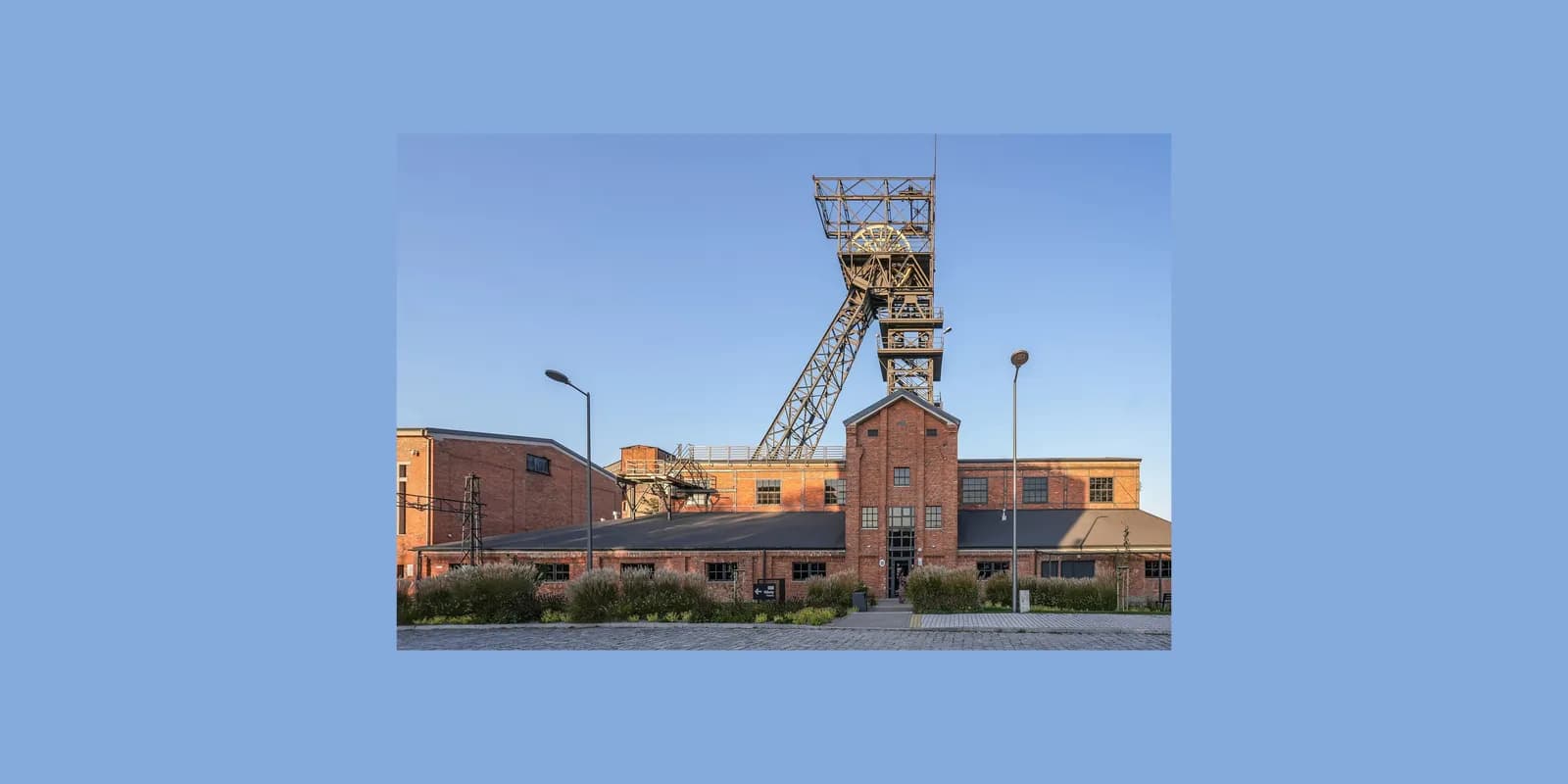
Perhaps nowhere illustrates this transformation more clearly than the Ignacy Historic Mine.
Once one of the oldest continuously operating coal mines in Upper Silesia, the former Ignacy Mine closed in 1995 after more than 200 years of production. Instead of allowing the complex to fall into decline, the city chose to preserve one of its most significant industrial landmarks.
Today, visitors can explore restored engine houses, discover interactive exhibitions explaining the history of mining and steam power, and climb the former water tower, now an impressive observation point offering panoramic views across Rybnik's skyline, surrounding forests and former mining landscape.
The museum has become much more than a reminder of the past. It is a symbol of the city's wider transformation, demonstrating how industrial heritage can support education, tourism and community pride while contributing to a more sustainable future.
Rather than erasing its history, Rybnik has chosen to reinterpret it, allowing new generations to understand how the city was built while imagining what comes next.
Discovering Rybnik Today
The story of Rybnik is no longer defined solely by coal. While its industrial heritage remains an important part of the city's identity, today's visitors are just as likely to remember its green spaces, welcoming cafés and relaxed atmosphere as its former mines.
One of the city's greatest strengths is its balance. Within a short walk of the historic centre, visitors can enjoy leafy parks, woodland trails and waterside scenery that challenge many of the stereotypes often associated with Upper Silesia.
This combination of history and nature makes Rybnik an appealing destination for a weekend break or as part of a wider journey through southern Poland.
Things to See and Do in Rybnik
Whether you are visiting for a day or planning a longer stay, there is plenty to discover across the city.
Explore the Historic Market Square
At the heart of Rybnik lies the Rynek, the city's attractive Market Square and one of its most popular gathering places.
Surrounded by colourful townhouses, cafés, restaurants and independent businesses, it offers a lively atmosphere throughout the year. Outdoor terraces fill with residents during the warmer months, while seasonal markets and cultural events regularly bring the square to life.
Although much of the surrounding architecture reflects later rebuilding and renovation, the square follows the footprint of medieval Rybnik and remains the social centre of the city.
It is the perfect place to pause with a coffee before exploring the surrounding streets.
Visit the Basilica of St Anthony
Dominating Rybnik's skyline are the twin towers of the Basilica of St Anthony, one of the largest churches in Poland.
Completed in the early twentieth century in an impressive neo-Gothic style, the basilica reflects the city's rapid growth during the industrial era, when an expanding population required a much larger place of worship.
Its soaring interior, stained-glass windows and striking brick architecture make it one of Rybnik's most recognisable landmarks and a favourite subject for photographers.
Experience the Ignacy Historic Mine
No visit to Rybnik is complete without exploring the Ignacy Historic Mine, one of Poland's finest examples of industrial heritage regeneration.
Interactive exhibitions tell the story of mining, engineering and steam technology, while beautifully restored machinery offers a fascinating insight into the lives of generations who worked underground.
The highlight for many visitors is the observation tower, where sweeping views stretch across the city, forests and former mining landscape.
Standing at the top, it becomes clear just how much of Rybnik is now covered by greenery.
Rybnik's Surprisingly Green Landscape
Perhaps the biggest surprise for first-time visitors is just how green Rybnik feels.
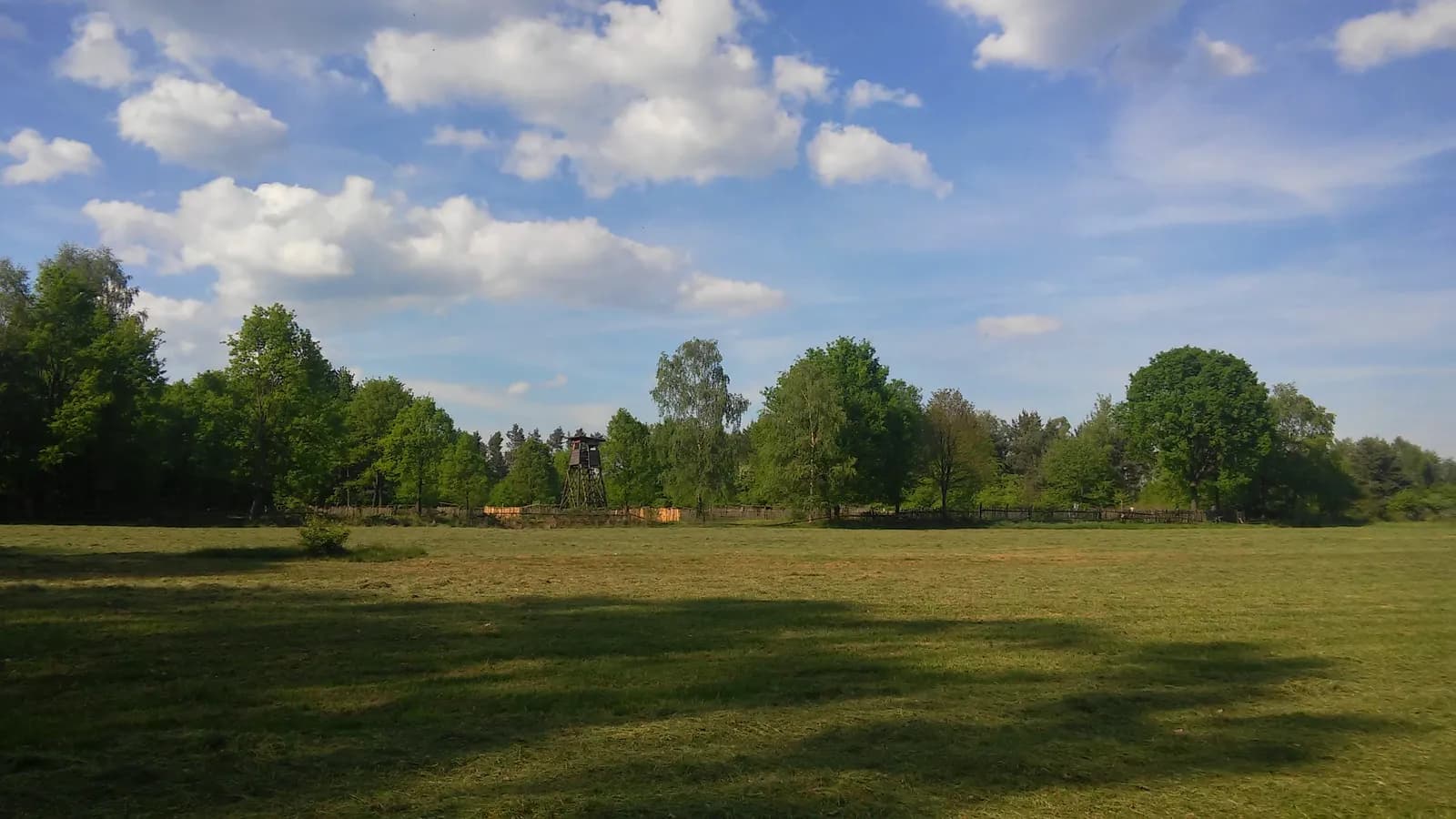
Around half of the city's area consists of forests, parks, recreational land and open countryside. Historic fish ponds remain part of the landscape that first gave Rybnik its name, while walking and cycling routes connect neighbourhoods with nearby woodland and nature reserves.
Just outside the city, Rudy Landscape Park offers miles of scenic trails through pine forests, wetlands and historic villages. Popular with walkers, cyclists and families, it provides an easy escape into nature only a short distance from the city centre.
The nearby Rybnik Reservoir has also become an important recreational destination. Created during the construction of the power station, it is now enjoyed for sailing, fishing, birdwatching and waterside walks, demonstrating how former industrial infrastructure can evolve into valuable community spaces.
Together, these landscapes give Rybnik a character that many visitors do not expect when they first think of Upper Silesia.
A City Investing in Culture
Rybnik has also developed into an increasingly vibrant cultural destination.
Throughout the year, the city hosts concerts, festivals, exhibitions and community events that bring residents together in public spaces across the centre. Local theatres, galleries and cultural institutions continue to expand the city's creative offer, while restored industrial buildings provide distinctive venues for exhibitions and performances.
The annual Rybnicka Jesień Chóralna (Rybnik Choral Autumn) has earned an international reputation, welcoming choirs from across Europe and reflecting the region's long-standing musical traditions.
This growing cultural scene complements Rybnik's industrial heritage, helping to create a city that feels dynamic rather than defined by its past.
Looking Beyond Coal
Across Europe, many former industrial cities face the challenge of adapting to changing economies while preserving their heritage. Rybnik has become one of Poland's most encouraging examples of how that transition can be achieved.
Investment in cleaner transport, energy efficiency, environmental improvements and urban regeneration is gradually reshaping the city. New businesses continue to diversify the local economy, while restored heritage sites attract visitors interested in learning more about Upper Silesia's industrial story.
Importantly, this transformation has not come at the expense of local identity.
Mining traditions remain deeply respected, with many families still connected to the industry through previous generations. Museums, memorials and preserved machinery ensure those stories remain part of everyday life, even as the city looks towards a different future.
Rather than choosing between heritage and sustainability, Rybnik demonstrates that both can exist side by side.
Why Visit Rybnik?
For travellers exploring southern Poland, Rybnik offers something refreshingly different.
It is not a city built around grand royal castles or famous medieval monuments. Instead, its appeal comes from authenticity.
Here, visitors can explore one of Poland's most impressive industrial heritage sites in the morning, enjoy lunch overlooking the Market Square, cycle through forests in the afternoon and watch the sunset across the Rybnik Reservoir in the evening.
That combination of history, culture and nature gives the city a distinctive character that is increasingly attracting visitors looking beyond Poland's best-known destinations.
It is also an excellent base for discovering the wider Upper Silesia region, with easy access to nearby towns, heritage attractions and outdoor recreation.
A Future Rooted in Its Past
Rybnik's journey from medieval fishing settlement to coal mining powerhouse and now to a greener, more diversified city reflects the wider story of modern Upper Silesia.
Its industrial heritage remains impossible to ignore, but neither does it overshadow everything else the city has to offer. Restored pithead towers now stand beside cycle paths and cultural venues. Historic fish ponds continue to shape the landscape more than a thousand years after they first sustained local communities. Former mining sites have become places of learning, creativity and celebration.
For residents, this transformation represents decades of determination and resilience. For visitors, it offers the opportunity to discover a city that is constantly evolving while remaining proud of where it came from.
Rybnik proves that the future does not have to erase the past. Instead, it can build upon it, creating a destination where industry, heritage, culture and nature exist together in a way that feels both genuine and inspiring.
A City That Rewards Curiosity
Beyond its reputation as one of Upper Silesia's historic coal mining centres lies a destination rich in heritage, green spaces and community spirit. From the restored Ignacy Historic Mine and the bustling Market Square to woodland trails, lakes and cultural events, today's Rybnik offers visitors a far broader experience than many expect.
As the city continues its journey towards a cleaner and more sustainable future, it remains firmly connected to the people, traditions and industries that shaped it. That balance between preservation and progress is what makes Rybnik one of southern Poland's most compelling places to explore.